

|
||
|
|
||
|
||
|
A message from Durham Police and Crime Commissioner... Help is there – but we must make it easier to reach. |
||
|
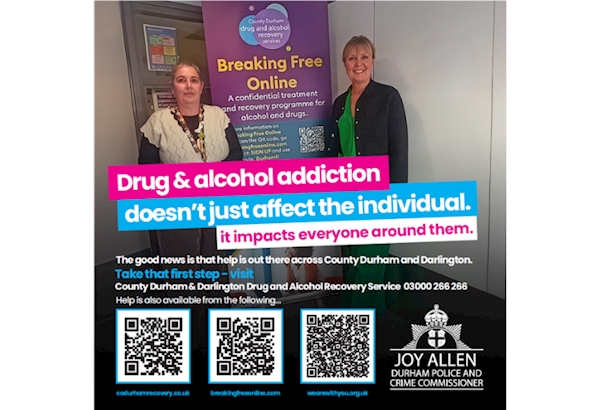
Last week, I spent time with people in treatment and recovery at a local drug and alcohol service. It was one of those visits that stays with you, because I was able to see the excellent service being provided by County Durham Drug and Alcohol Recovery Service and hear directly from service users who bravely shared their lived experience with me. I met people at different stages of their journey. Some were just at the start of their recovery journey. Others were attempting to rebuild their lives after years of addiction. What struck me most was not just their resilience, but how many of them said the same thing: “I wish I’d known about this service sooner.” The majority of those in the room told me their path into support could have been simpler. Some had gone to their GP and left with a phone number rather than a direct referral. Others said they didn’t feel confident enough to make that call on their own. In that moment, when someone is ready to ask for help, the system must meet them halfway. One woman shared how she was finally referred into support through hospital care. That intervention changed her life and that of her young daughter. But it also raised a question, why did it take a near death experience, to connect her to help that already existed? We need to do better at joining the dots, across GPs, hospitals, policing, and community services, so that no one falls through the gaps and we don’t lose valuable opportunities to signpost people into treatment and rehabilitation services. Another powerful message from those in recovery was about families. They told me addiction doesn’t just affect the individual, it impacts everyone around them. They stressed how important it was that families are supported too. Addiction can affect anyone, from any walk of life. Recently, Andrew Lloyd Webber spoke openly about his own experience of alcohol addiction and impact on his loved ones and friends, and how support from Alcoholics Anonymous helped him on his path to recovery. Hopefully his admission will help break down stigma and reminds us that no one is immune, and no one should feel ashamed to seek help. The good news is that help is out there across County Durham and Darlington. Digital support, like Breaking Free Online, offers people a confidential, evidence-based programme they can access at any time. It helps people understand the root causes of their addiction and develop practical coping strategies for long-term recovery. For some, that flexibility, being able to reach out in their own time, in their own space can make all the difference. But services alone are not enough if people don’t know they exist, or don’t feel able to access them. So, my message is simple, if you are struggling, or someone you love is struggling please know that support is there. You are not alone, and it is never too early or too late to seek help. Take that first step – visit County Durham and Darlington Drug and Alcohol Recovery Service (03000 266 266) County Durham Drug and Alcohol Recovery Services Stride (Supporting Treatment and Recovery in Darlington) (01325 809 810) Drug and Alcohol Support in Darlington (STRIDE) | WithYou https://www.breakingfreeonline.com/ AI-Anon Uk (for families and friends of alcoholics) Helpline 0800 0086 811
| ||
Reply to this message | ||
|


|